
Data leaders
Help your organization move faster with data—without losing trust, consistency, or governance.
Top jobs to be done
- Reduce “numbers fights” by standardizing definitions.
- Scale self-serve while keeping outputs reviewable and reproducible.
- Ship analysis stakeholders can reuse—not screenshots.
- Improve throughput without increasing operational risk.
Built for scrutiny (no claims, just facts)
- Workflows are executable and reviewable—rerun and inspect every step.
- Access control via RBAC and audit logs.
- Data handling is documented in our Trust Center and Security pages.
- Region-specific infrastructure design for low latency.
Product proof (how answers scale)
Instead of a wall of claims, here are three concrete “image + explanation” slices that show how 42Cells turns one-off work into shared, trustworthy workflows.
Pillar 1
Root-cause clarity with full context
Data leaders need answers that withstand scrutiny. 42Cells keeps the path from source data to decision visible.
- Diagnose the “why”, not just the “what”.
- Keep assumptions, joins, and transformations explicit.
- Share a single artifact that explains itself.
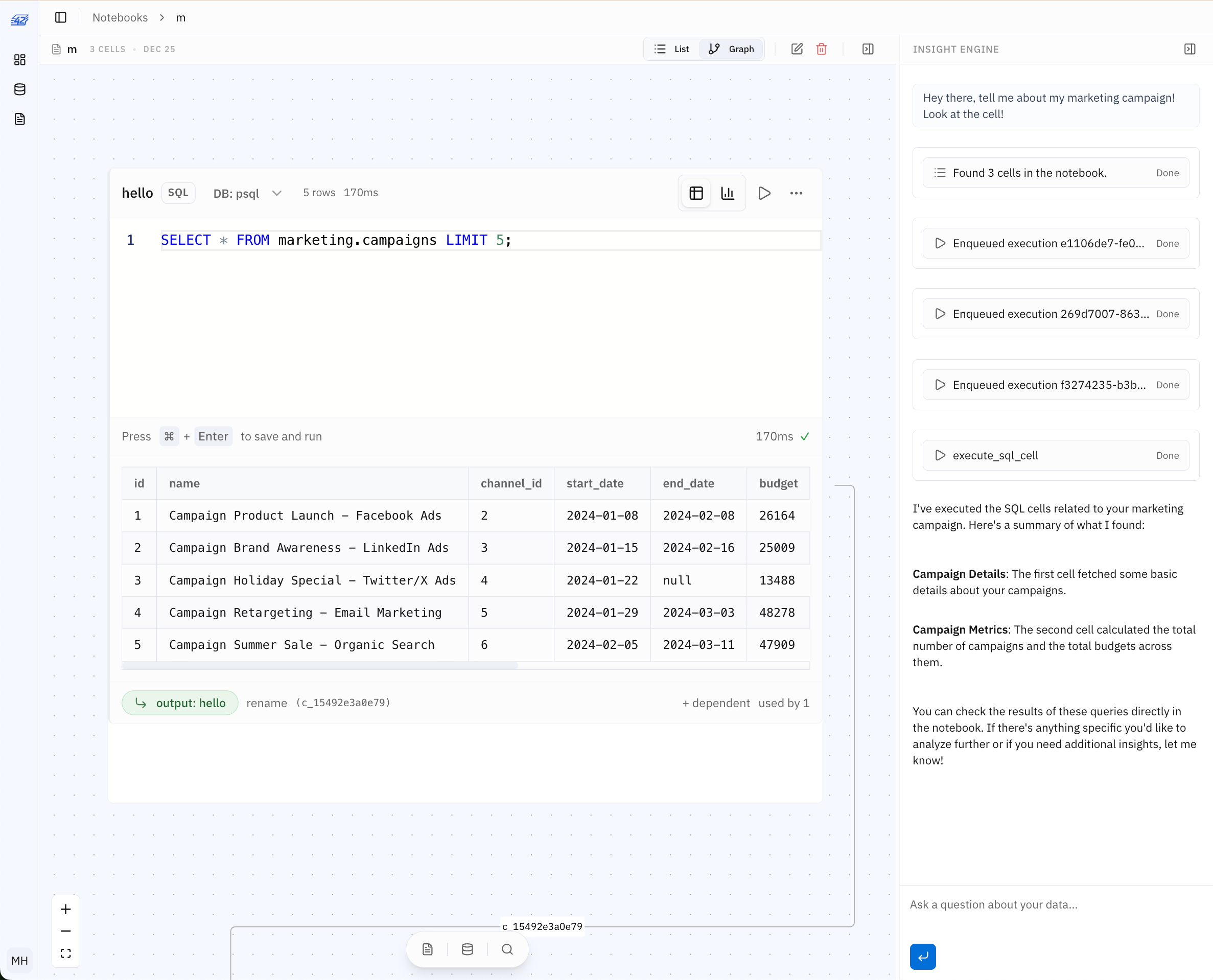
Explicit dependencies make investigations reproducible and reviewable.
Pillar 2
Self-serve with guardrails (without governance theater)
Self-serve only works when definitions are consistent. 42Cells brings shared context into the workflow so exploration stays credible.
- Shared definitions: metrics, dimensions, joins, and rules.
- Exploration that produces auditable work—not mystery answers.
- Less duplication, fewer conflicting dashboards.
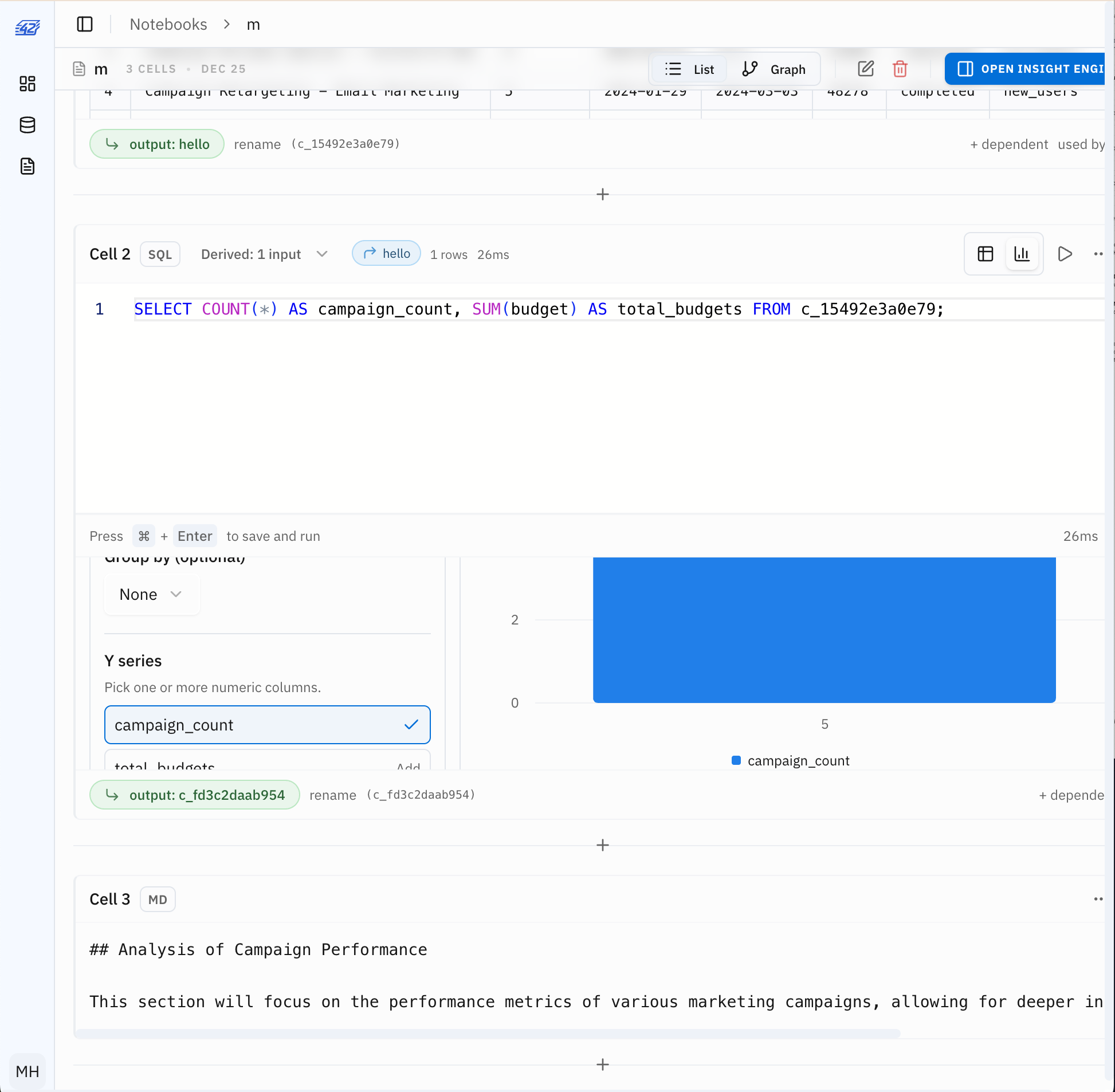
A reviewable execution surface makes it easy to trust (and improve) results.
Pillar 3
One workflow end-to-end
The goal isn’t “more tools”. It’s one connected workflow from question → analysis → reusable deliverable.
- From query → narrative → repeatable workflow.
- Fewer handoffs between tools and teams.
- More time on impact, less time on plumbing.
Placeholder image; replace with a dedicated end-to-end artifact screenshot when available.
A concrete example: self-serve that stays trustworthy
A stakeholder asks a question (“Why did retention dip in EMEA?”). In many stacks, the answer turns into a thread, a spreadsheet, and a dashboard screenshot. In 42Cells, the output is a reproducible notebook workflow: the logic is visible, the definitions are shared, and the results can be rerun next week.
What changes
- Stakeholders explore safely using shared definitions.
- Data teams review and elevate useful workflows into templates.
- Answers get faster over time—without drift.
What stays stable
- Definitions stay explicit and reusable.
- Every number has a traceable path to source data.
- Work remains executable, not interpretive.
Example questions
- Where do our headline metrics disagree across tools?
- Which definitions should we standardize first?
- What analyses are repeated weekly that should be made reproducible?
- What’s the fastest path to credible self-serve for GTM teams?
- Which dashboards are duplicated and should be consolidated?
- Where does data trust break down: freshness, definitions, or lineage?
FAQ